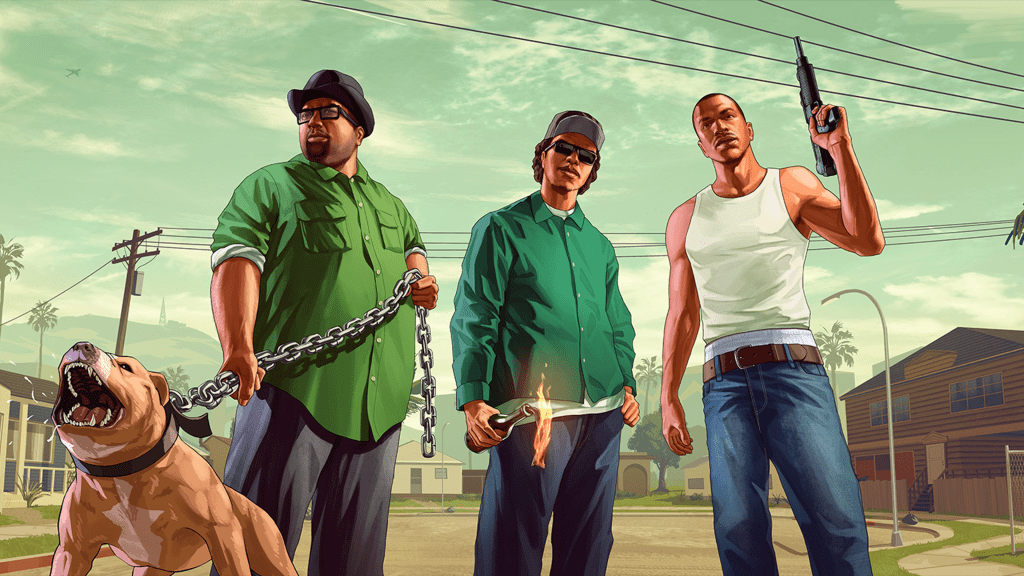
Let’s go find the Dragon Orbs, muthafucker!!
I started playing D&D when I was 19. I was an ALC kid who got a diploma without reading too many books, and my literary influences were Grand Theft Auto, the movie Troy, and pro wrestling. I didn’t even like the Lord of the Rings movies. That was the norm at our table though, and we played the game all wrong and absolutely loved our broken-beyond-all-repair homebrew. Because broken as it was, the magic of the game still shined through. It was story-telling, it was invoking something beyond ourselves.
The 3.5 core rulebooks were probably the first books I read for pleasure since 8th grade (Stephen King’s The Stand), and while it showed the many game mechanics we were screwing up in our game, it was also my first road map for worldbuilding. In gaming and fantasy we throw that word around enough that it’s meaning has become dull, but take a second and whisper those words…“world building,” and imagine learning for the first time in your life that you have that power. It spurred a hunger for knowledge. I mean, if I’m going to create worlds, then I had to start learning about the world I actually live in. (Because despite all the bad news always flooding our brains, all in all, it’s an awesome world). I started with documentaries from the History Channel (20 years ago mind you!) and the Science Channel, and then when I deployed to Iraq, I gave in and started reading for pleasure. And have kept reading for the last two decades.
The fantasy worlds and the heroes and villains who lived there opened so many doors I never knew existed. Dragonlance, Dark Elf Saga, Song of Ice and Fire, Dune, Wheel of Time, Malazan, Hobbit, Lord of the Rings (I grew wiser and came to love the movies too. I was like a child who thought I didn’t like mustard.) For sure the most important book I found was The Hero with a Thousand Faces by Joseph Campbell. What I at first thought would be a how-to of telling a hero’s journey (the shallowest of possible takeaways from Campbell’s work) instead became a spiritual document of the power of symbol, myth, and storytelling. It became the why? rather than the how? of the fantasical(More on Campbell another time). Meanwhile, the games I ran and the worlds I drew up became more vibrant, more dangerous, more magical, more alive. With all due respect to CJ and the Grove Street Family, I had come a long way from basing quest lines off GTA missions and homebrewing in the “Respect” stat!
The one thing I hadn’t adjusted in my Dungeon Mastering was the systems I used. Sure, I jumped from D&D 3.5 and D20 modern to Pathfinder 1e, but that’s like switching from Coke to, well…Coke. Losing the ability to run in-person games during the pandemic led me to give 5e a try though, and while you wouldn’t think D&D 5e would be the gateway drug to OSR, it put me in a place where as a DM, I had to learn the rules all over again.
What set me down the rabbit hole of games was 5e’s stubborn decision not to list prices for magic items. “Hold an auction or go on a quest for it,” they told me. Reading through some of the pricing listed and magic item limitations told me I didn’t know how to balance the loot yet, and I didn’t want a busted homebrew. So after 16 years of playing, I ran my first module. I researched which modules had the least railroading, and went with Tomb of Annihilation (I just now stopped and said, “That can’t be how you spell anhialation.” Always learning) and as much hate as I see directed toward 5e, that module delivered. It sucked me deeper into D&D lore too. Who is Acererak? What’s Chult? Who are Artus Cimber and Dragonbait? I need to know more about Spheres of Annihilation (that’s really how you spell it, huh?)

Maybe it’s time to switch to Pepsi?
D&D lore, like any system of myths with multiple storytellers, is a mess. It’s retconned, and re-retconned, and contradictory, and bloated. It’s wrecked homebrew upon wrecked homebrew made canon. So I said, “start at the beginning,” and read through the AD&D corebooks (I know now that wasn’t the beginning) and had a chance to play some of it with Jeff Leason at the Dungeon Hobby Shop during its brief and troubled tenure in Lake Geneva. Going back in time system-wise helped me make sense of in-game things I had never considered. (Why do druids have their own unteachable language? Why are 3.5e spellcasters COMPLETELY broken?) When I started looking for more people talking about AD&D on Twitter, I found the hastags #OSR and #BROSR came up a lot.
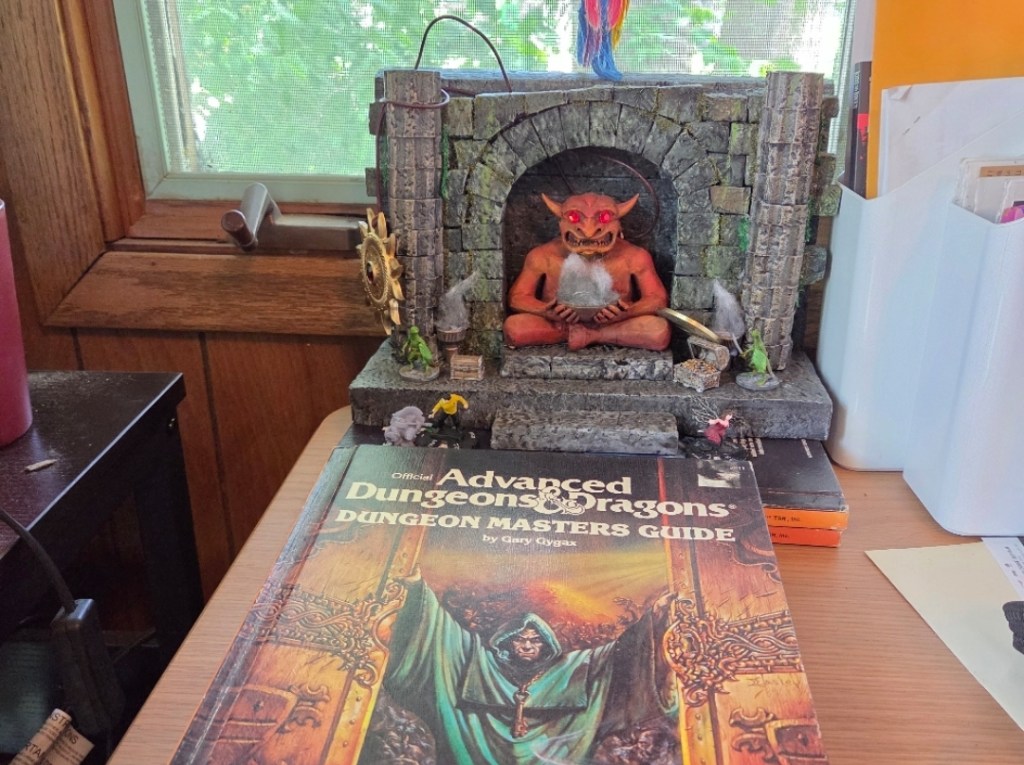
That was when I found the treasure troves of hobby wisdom: Grognards and Bros. People who have been playing since the hobby was new, people examining the old texts for new answers, people experimenting on a system level rather than asking if [Insert IP here] can be run using 5e? People who delve. People who read and study and play games rather than listen to famous people pretend to play. Do they fight a lot amongst each other and with everyone else about silly shit? They sure do! But they’re the lifelong students of the hobby. I did the fly on the wall for a long time, learning, asking the occasional question or chiming in, but mostly getting oriented.
Appendix N came up a lot in the discourse. It’s a list of authors, series, and books Gary Gygax lists as his inspirations in the formation of AD&D. I’ll admit, at first I thought it was folks making too much of a bit entry in a book. Like an author saying, “I like these books,” and people saying, “then I will too!” (It brought to mind the Gunters in Ready Player One by Ernest Cline, scouring the creator’s favorite books in search of a hidden easter egg he left in his game.) But the more it was referenced and the more reverence I heard for it from people who were running awesome games (Dungeon Crawl Classics, and also thank you Jeffro), I decided the worst that could happen would be I’d read a few books I didn’t care for and then give up on the list.
Instead, I realized all the fantasy I had been reading and loving, and the games I have been playing were built upon the shoulders of titans. I’ll admit, I’m only 9 books and a handful of stories into it, but the ones I’ve read have each been so evocative in their prose, the endless horizons of their constructed worlds, the point of view of man’s eternal quest for something greater within himself. Rather than being the generations who learned what fantasy is from playing D&D, these authors were explorers into stories and themes and worlds not yet discovered. They were the Apollo crew walking on the moon with 60’s tech before the next three generations played it safe in Earth’s orbit.
So I want to explore Appendix N, book by book. From a literary standpoint? Sure, a little, but I know that’s been done already by folks who had read much more deeply into old Sci/Fantasy before beginning their writing. So I want to look instead to what Appendix N has to teach us as DMs and referees, the things that become flattened by fiction built upon an ever-shifting game that has fallen deep into amnesia when it comes to recognizing its roots.
Other than tweets and a few episodes of the podcast Appendix N Book club, I have not read the secondary sources analyzing Appendix N (Appendix N: the Literary History of Dungeons and Dragons by Jeffro Johnson or Appendix N: the Eldritch Roots of Dungeons and Dragons by Peter Bebergal). I will wait to read those until I’ve read a bulk of the books on the list so I don’t risk regurgitating the points those authors have already made.
I just finished reading Swords and Deviltry by Fritz Leiber (which gave me lesson after lesson until I decided I should make a blog of them) so I will make that the subject of Better DMing Through Reading #1.
If you’re interested in Appendix N and want to keep up with my journey, feel free to subscribe. Or you can chat with me on Twitter (where I’m guessing a bulk of my readers know me from) @mawrundown. Profile Name: Dance Commander.
Gygax: You solved my puzzle!
And remember folks…
Keep on Dancin’
 The Dancefloor